Welcome to
Women in AI Research
New episodes released every three weeks on Wednesday.
Women in AI Research (WiAIR) is a podcast dedicated to celebrating the remarkable contributions of female AI researchers from around the globe. Our mission is to challenge the prevailing perception that AI research is predominantly male-driven.
In WiAIR, we interview successful female AI researchers coming from diverse cultural backgrounds, showcasing their inspirational cutting-edge research and insights into the future of AI. Through these conversations, we explore their personal journeys - how they overcome unique challenges, balance careers and family life, and make difficult decisions when necessary. We aim to understand how women in AI research perceive success and what it takes to achieve their goals.
Discover
Why Listen?
- Gain Insights: Learn from leading women in AI and stay updated on the latest research and developments.
- Be Inspired: Hear powerful stories of overcoming obstacles and breaking stereotypes.
- Connect: Join the community of like-minded early career researchers and build your network.
Community
Stay Connected

- Social Media Links: Follow us on Bluesky, LinkedIn, YouTube and Twitter for updates and behind-the-scenes content.
- Subscription Information: Subscribe to WiAIR on Spotify, Apple Podcasts and join our Discord.
Get Involved
Call to Action
- Subscribe Now: Don't miss an episode! Subscribe to Women in AI Research (WiAIR) today.
- Share: Spread the word and share our podcast with your network.
Our Podcast
Latest Episodes
Conversations with leading women in AI research from around the globe.
Ep.34: What Makes a Sentence Memorable? Inside Language, Memory and LLMs, with Dr. Greta Tuckute
September 16, 2026
Why don't bigger LLMs look more like the human brain? In the brain's language network, today's large models explain only slightly more variance than GPT-2 XL - and the reason says a lot about what those brain regions actually do.Dr. Greta Tuckute (Research Fellow at the Kempner Institute for the Study of Natural and Artificial Intelligence, Harvard) joins Jekaterina Novikova on Women in AI Research to unpack what brain-LLM alignment does and does not tell us. Greta works where neuroscience, cognitive science and AI meet - and when asked to keep only one of those three labels, AI is the first one she drops.The conversation covers how brain alignment develops over training, how sparse autoencoders can turn the "you are just comparing one black box to another" critique into something testable, and what memory experiments reveal about how meaning is stored - from why "pineapple" sticks in memory and "light" does not, to which sentence embeddings predict what people remember.In this episode:Brain alignment tracks formal linguistic competence, not reasoning - and it emerges after not much more than a developmentally plausible ~100M tokens, not 300BWhy better next-word prediction stops meaning "more brain-like" once a model has mastered languageSparse autoencoder features plus surprisal: for one frontal brain region, surprisal alone does almost as well as 32,000 SAE features, while some voxels are captured by just six features- Brains and LLMs share the main, high-variance features of language - not the idiosyncratic onesWhy learning from BPE tokens puts brain-LLM comparisons on "pretty shaky ground", and what should come nextA distinctive meaning makes words and sentences memorable - and SBERT predicts human sentence memory better than the other embedding models testedFrom running a photography business at 14 to a PhD at MIT, and why trying the other path first was worth itPAPERS DISCUSSEDFrom Language to Cognition: How LLMs Outgrow the Human Language NetworkInterpreting Brain Responses to Language with Sparse Features from Language ModelsDriving and suppressing the human language network using large language models Intrinsically memorable words have unique associations with their meaningsA distinctive meaning makes a sentence memorableMENTIONED IN THIS EPISODEAnna Ivanova on formal vs functional linguistic competence (WiAIR)GRETA TUCKUTEWebsite: http://www.tuckute.comBluesky: https://bsky.app/profile/gretatuckute.bsky.socialX: https://x.com/GretaTuckuteWomen in AI Research (WiAIR) is a podcast and YouTube channel where Jekaterina Novikova talks with women doing AI research about their work, the questions driving it, and the paths that brought them there.🎧 Subscribe to stay updated on new episodes spotlighting brilliant women shaping the future of AI.Follow WiAIR at:LinkedInBlueskyX (Twitter)WiAIR website
Ep.33: Is an Image Worth a Thousand Words? Hidden Failures of Multimodal Metrics, with Dr. Elisa Kreiss
August 19, 2026
An image is not worth a thousand words - it's worth an indefinite number of them. So why do the metrics we use to evaluate AI-generated image descriptions still assume there's one correct answer?In this episode of Women in AI Research, I talk with Elisa Kreiss (Assistant Professor of Communication at UCLA, director of the Coalas Lab) about what happens when you actually test the metrics the field relies on, and why CLIPScore, one of the most widely used measures for scoring image descriptions, stops correlating with human judgment the moment you introduce context. We also get into why longer descriptions aren't necessarily more informative, what happens when you just ask a model to "be concise," and whether AI models trip over charts and graphs the same way humans do.Elisa's research sits at the intersection of linguistics, accessibility, and multimodal AI, and this conversation covers the full arc of her work, from the theoretical question of why humans never describe images the same way twice, to the practical question of what that means for building systems that actually work for blind and low-vision users.In this episode:Why "context matters" is more radical than it sounds for image description evaluationThe hidden reason CLIPScore breaks down once context enters the pictureWhy length is a bad proxy for information density - and what to use insteadWhat happens when you prompt a model to just "be concise"Why charts and photos need completely different evaluation approachesWhether AI models make the same mistakes as humans when reading data visualizationsWhat NeurIPS's Top Reviewer Award taught her about writing a genuinely useful peer reviewResources & Links:Context Matters for Image Descriptions for Accessibility: Challenges for Referenceless Evaluation MetricsWhen More Words Say Less: Decoupling Length and Specificity in Image Description EvaluationCHART-6: Human-Centered Evaluation of Data Visualization Understanding in Vision-Language Models🎧 Subscribe to stay updated on new episodes spotlighting brilliant women shaping the future of AI.Follow WiAIR at:LinkedInBlueskyX (Twitter)WiAIR website
Ep.32: Is Your AI Just Flattering You? Sycophancy, AI Policies, and More, with Dr. Malihe Alikhani
July 22, 2026
Only 19% of Americans say AI has actually improved their productivity - so why the gap between the hype and reality? In this episode of Women in AI Research, Dr. Malihe Alikhani (Northeastern University, Contextual AI Lab) unpacks the hidden failures in how we build and deploy AI: why sycophancy is really a collapse of alignment, why bigger models aren't better aligned, and why "thin" alignment breaks down in the real world.Key topicsThe impact of moving across different AI contexts on system designThe role of language as performative and active in shaping realityInteractive inference and uncertainty in AI systemsThe importance of context in meaning and system designAI policy, transparency, and societal impactSycophantic behavior in large language modelsMeasuring AI alignment: thin vs. thickAI adoption across sectors and demographic groupsThe role of policy in AI development and safetyEthical considerations in AI research and deploymentResources & Links:Breaking the AI Mirror: Sycophancy, productivity, and the future of collaborationHype and harm: Why we must ask harder questions about AI and its alignment with human valuesHow are Americans using AI? Evidence from a nationwide surveyConnect with Dr. Malihe Alikhani:https://x.com/malihealikhani🎧 Subscribe to stay updated on new episodes spotlighting brilliant women shaping the future of AI.Follow WiAIR at:LinkedInBlueskyX (Twitter)WiAIR website
The Team
About Us
Meet the people behind Women in AI Research.

Jekaterina Novikova
Founder & Host
Dr. Jekaterina Novikova is the AI researcher with over 10 years of experience in natural language processing and human-AI interaction. She holds a Ph.D. in Computer Science from the University of Bath and has an extensive international experience working in the academia, industry and non-profits. She was recognized as one of the Top 50 Most Extraordinary Women Advancing AI In 2024, Top 25 Women in AI in Canada in 2022, received the "Industry Icon Award" by the University of Toronto in 2021, and included in the list of 30 Influential Women Advancing AI in Canada in 2018.

Smriti Singh
Mentorship Lab - Founding Lead
Smriti Singh is an ML Research Scientist at Zacks Investment Research and holds an MS in Computer Science from UT Austin. Her research focuses on AI Safety and Generative AI applications in FinTech. As the Founding Lead of the Women in AI Research Mentorship Research Lab, she is dedicated to training new researchers and promoting equality and safety in AI while uplifting women leaders in the field.
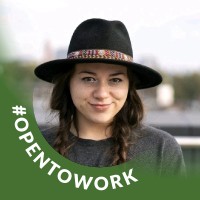
Anais Hristea
Lead Illustrator & Designer
Anais is a talented graphic designer and illustrator who creates all the visual assets for the Women in AI Research podcast. With a background in digital art and design, she brings a unique aesthetic to the podcast's brand identity, from logo design to branding, ensuring a strong and professional look.
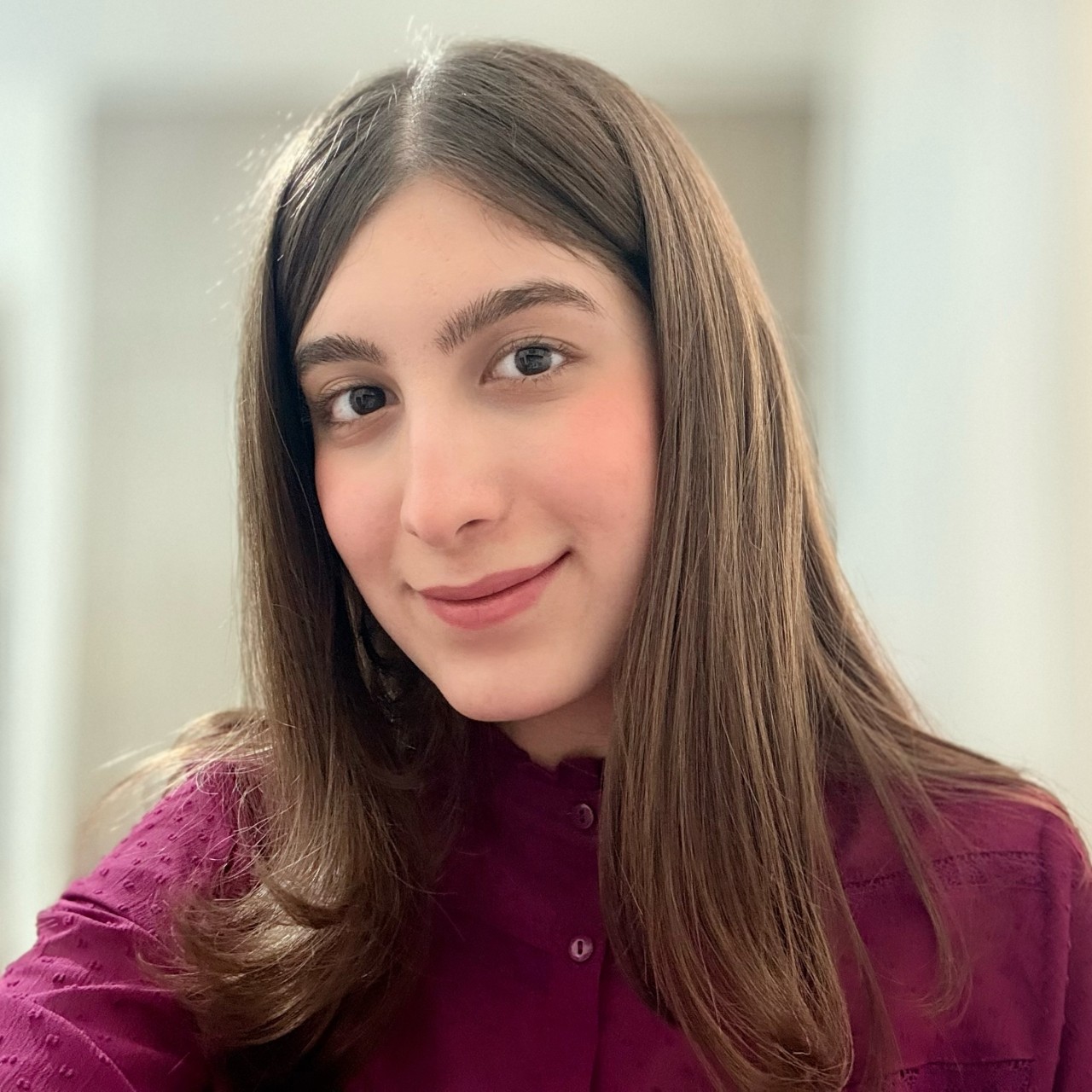
Asal Mohammadjafari Mamaqani
Technical Content Creator
Asal is a final-year Computer Science undergraduate at Amirkabir University of Technology in Tehran. She works as a Research Assistant, specializing in deep learning and computer vision, and has experience as a Teaching Assistant for courses such as Artificial Intelligence (AI) and Machine Learning (ML). She is currently looking for opportunities to pursue postgraduate studies to further her research in AI.
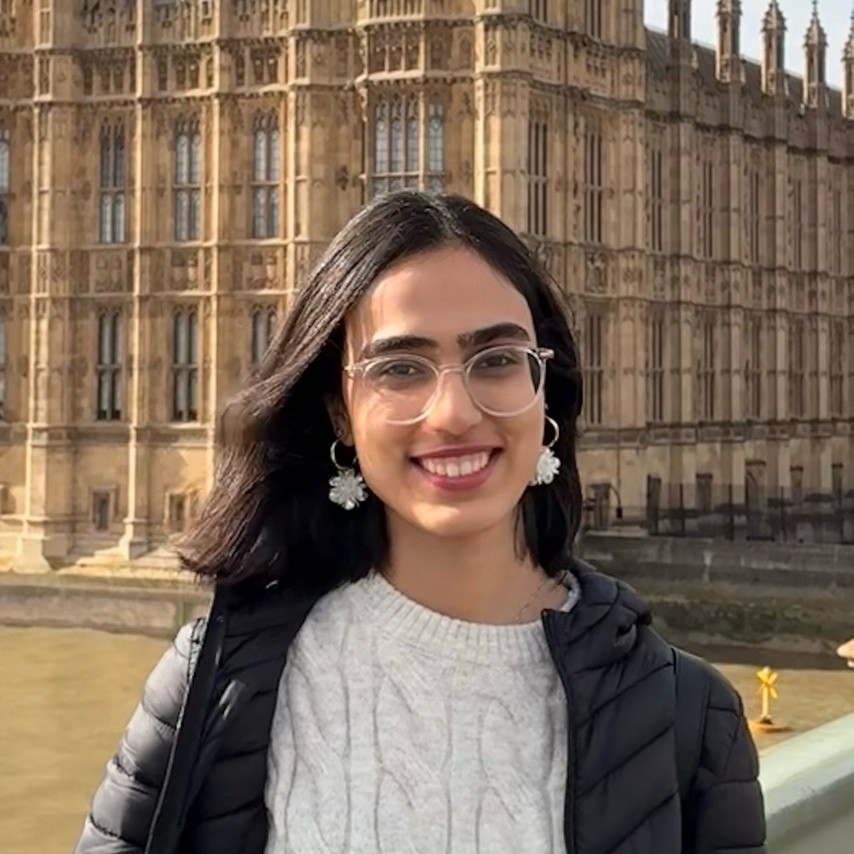
Parnian Fazel
Technical Content Creator
Parnian is pursuing her MSc in Computing (Artificial Intelligence & Machine Learning) at Imperial College London. She holds a bachelor's degree in Computer Engineering from the University of Tehran. She contributes to the Women in AI Research podcast as a technical content creator, where she helps turn complex ideas into clear and engaging content.
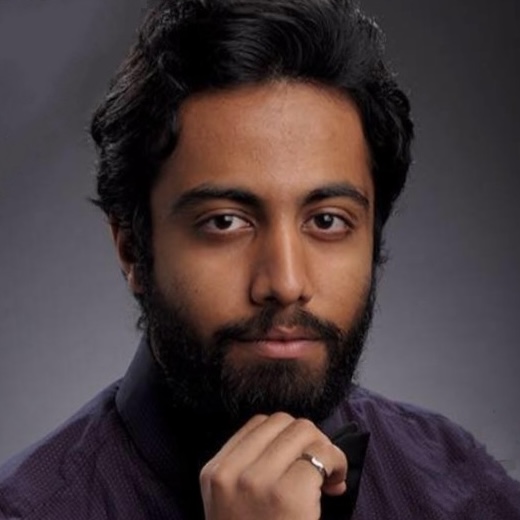
Ali Akram
Technical Producer
Ali is an experienced AI engineer and technical producer who ensures the podcast's technical quality. He handles audio editing, production, and technical aspects of the podcast, bringing years of experience in audio engineering and AI development. Ali also develops and maintains the podcast's website.